People question why they were born in Nigeria. Many make jokes about it, treating the misfortunes that come with being Nigerian as though they were ordinary occurrences in everyday life. We laugh about our pain, make light of our suffering and turn our misfortunes into jokes. Perhaps laughter has become one of the few ways we know how to cope. But at what point did suffering become so ordinary that we could no longer recognise how abnormal our circumstances truly are?
Our educational system is riddled with irregularities, from examination malpractice to administrative complications, yet many of these problems have gradually become normalized. Those who refuse to participate in dishonest practices are sometimes treated as though they consider themselves holier than others. The prices of goods rise, and even when they eventually fall, they rarely return to what they once were. We complain, protest in conversations and make jokes about the situation, but how often do we question the structures that keep us trapped in these cycles? How often do we move beyond complaining to demand meaningful change?
For many Nigerians, travelling abroad comes with a rude awakening. The realization that life could be different, that some of the things we have accepted as normal are not universal experiences, begins to settle in. Perhaps that is when some people understand just how much their circumstances have limited their opportunities and shaped their expectations of life.
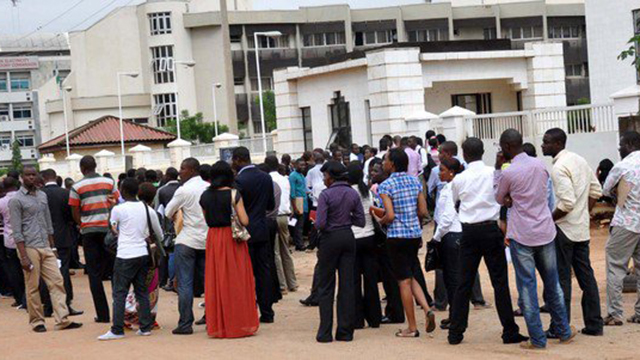
Healthcare is another painful reality. We complain about the state of our healthcare system, but the consequences of its weaknesses extend far beyond the walls of hospitals. Where people provide medical care beyond their training or professional competence, patients are placed at risk. When inadequate systems and unsafe practices become commonplace, institutional failures cease to be abstract problems. They become matters of human life and death.
So, the question remains: has Nigeria made us too cruel, or have we made Nigeria cruel?
Education, which once held a certain promise, seems to be losing its significance for the average Nigerian. And honestly, who can blame anyone for questioning its value when affording the basic necessities of life has become a struggle? How much more difficult must it be to pay educational fees, even in government-owned institutions? Some struggle to gain admission, others struggle to complete their studies, and those fortunate enough to graduate are left asking another question: what next?
You finish school, and you are considered lucky. You serve your country, and then what? Beyond the uncertainty of finding employment after the National Youth Service Corps, there are also concerns about insecurity in some deployment areas and the fear of being sent somewhere you may not feel safe. Yet these anxieties can become so familiar that they are treated as just another part of the Nigerian experience.
Children are abducted from schools. Families are left terrified. Communities are thrown into grief and uncertainty. And still, life continues. The average Nigerian returns to work, searches for food, pays bills and tries to survive another day. It is almost as though ordinary citizens have become the scapegoats, expected to bear the consequences of failures they did not create.
In times past, being educated held a certain promise. It meant something. It represented a possible route to opportunity, stability and advancement. Today, it can feel like just another word on a certificate, something people struggle to earn as though they are fighting for their lives, only to discover that the struggle does not end at graduation.
What future awaits the average Nigerian? What does tomorrow hold for someone who has done everything they were told to do, followed the rules, pursued an education and still finds themselves struggling to afford the ordinary necessities of existence? If you are lucky, perhaps you will find an opportunity that changes everything. Perhaps you will discover a way to survive without losing yourself completely. Perhaps you will make it through with your hope and sense of purpose intact.
But is survival all there is to life?
For many young women, marriage can appear to be one of the few available escapes from economic hardship. For young men, the options may seem to be fraud, small businesses or whatever means they can find to keep themselves afloat. Yet even entrepreneurship, often presented as a solution to unemployment, can become another battle against an economy that makes it difficult for small businesses to survive. The very things people turn to in an attempt to escape their circumstances are often constrained by those same circumstances.
And so, I find myself asking: what is my Nigeria? Why am I Nigerian? What does it mean to be Nigerian?
I am Nigerian. I laugh at everything, even my misfortunes. I laugh when things go wrong, when the system fails me, when life becomes harder than it should be. Perhaps I laugh because crying changes nothing. Perhaps I laugh because the alternative is to sit with the full weight of what it means to live this way. Or perhaps we have become so accustomed to hardship that we no longer know how to respond to it except with humour.
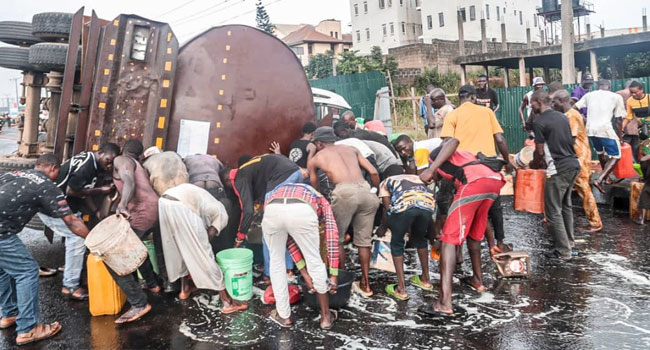
A fuel tanker falls on the road, and suddenly, hunger begins to negotiate with fear. When you are desperately hungry, when you have nothing to fall back on, the desire to survive can push you towards dangers you would otherwise avoid. You may find yourself drawn towards the very thing that could take your life, hoping to get something out of it. What kind of existence forces a person to weigh the risk of death against the immediate need to eat?
Is this what it means to be Nigerian? To live in a place where survival demands so much, where misfortune becomes entertainment, and where the pursuit of a better life feels like a fight against life itself?
Is Nigeria a sad reality for the average Nigerian born?
And if it is, is there hope for the average Nigerian, or does life only get worse from here?
Perhaps the saddest part is not that we have become accustomed to suffering. Perhaps it is that we have learnt to laugh about it, carry on with our lives and call it normal.
And somewhere beneath the laughter, beneath the complaints and the daily struggle to survive, the question remains: how much more are we expected to endure simply because we were born here?