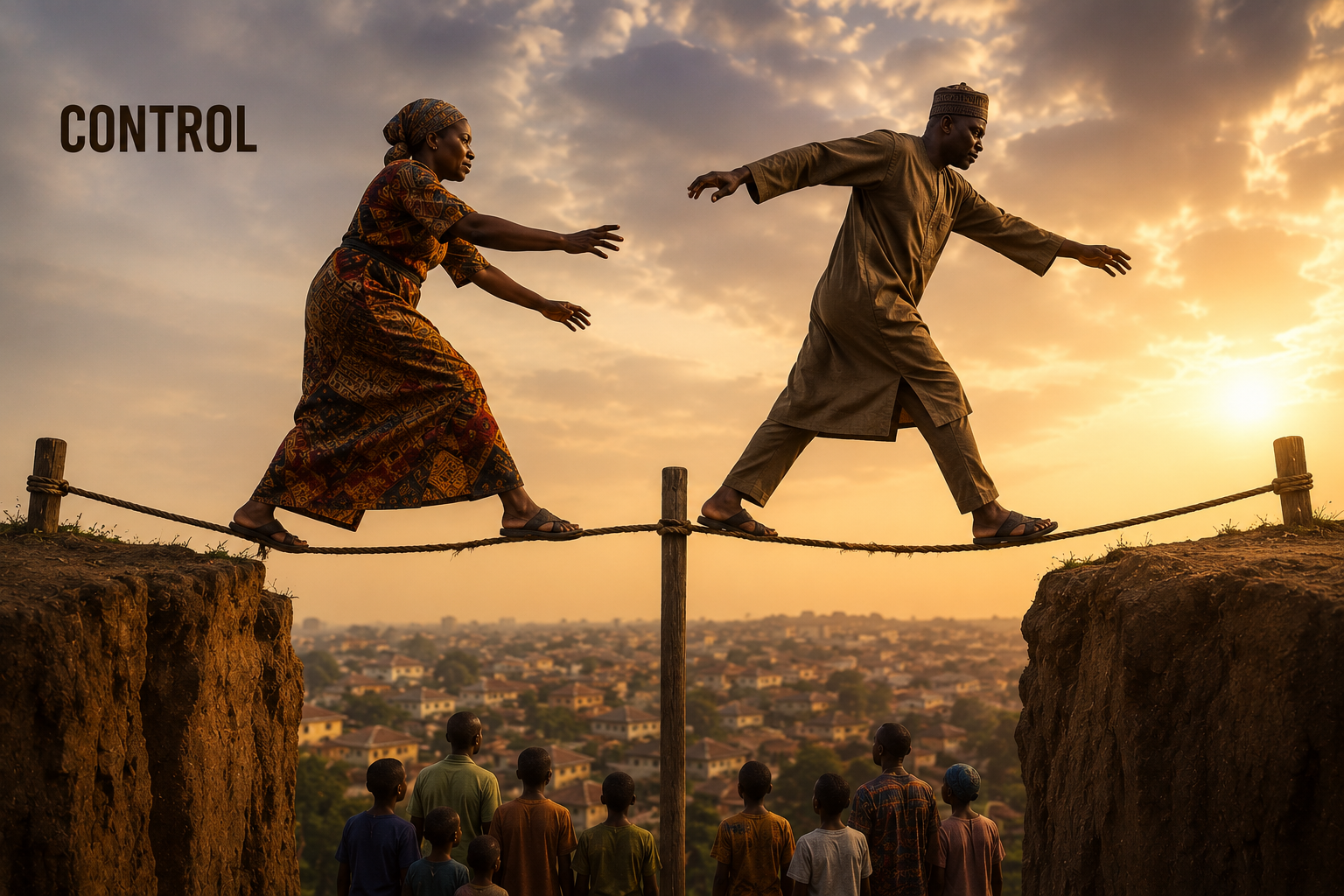
Almost every Nigerian grows up hearing some version of the same sentence: “It’s for your own good.†It arrives after punishment, after silence, sometimes after emotional distance that is never fully explained. Within many homes, discipline has long existed as an inherited structure—rarely questioned, rarely redefined, and deeply embedded in how authority is understood between parents and children.
.jpeg)
The discomfort surrounding this reality lies in how closely it connects to memory. Many adults raising children today were themselves raised in environments where obedience carried more weight than emotional expression. Respect was often measured through silence, endurance, and unquestioned compliance. In that structure, questioning authority was not simply discouraged—it was often reframed as disrespect.
For some, that upbringing is remembered as necessary structure, a form of discipline they believe helped shape resilience in a demanding society. In a country shaped by economic pressure, insecurity, and social expectation, strict parenting is often defended as preparation for survival rather than control. Authority, in that framing, becomes an act of protection.
.jpeg)
Yet another reality exists alongside it. Some children carry those same experiences into adulthood as emotional weight rather than structure. They describe growing up with limited space for emotional expression, where fear replaced explanation and silence became a learned response. For them, discipline did not always translate into understanding—it translated into suppression.
A widely discussed public moment involving former Big Brother Naija housemate Illebaye brought renewed attention to this tension. The reaction it generated reflected something familiar to many Nigerians: the blurred boundary between correction, authority, and emotional overreach within family dynamics. What was seen by some as discipline was viewed by others as discomforting control, particularly given the public nature of the exchange.
At 25, adulthood is legally and socially recognized in most contexts. This is why the situation sparked such divided interpretation. To some observers, continued parental authority in that moment felt misaligned with independence. To others, it remained consistent with cultural expectations where parental guidance does not automatically dissolve with age.
That divide reflects a broader cultural split in how parenting is understood. One side emphasizes structure, obedience, and correction as foundational values. The other emphasizes emotional awareness, boundaries, and the long-term psychological impact of upbringing. Neither perspective exists in isolation; both are shaped by lived experience.

What complicates the conversation further is the context in which many parents operated. Nigerian parenting has often taken place under conditions of financial strain, limited emotional resources, and significant societal pressure. Within that environment, discipline was frequently shaped by survival rather than emotional theory. Recognizing this context does not erase impact, but it deepens understanding of how such systems formed.
Social media has now created space for these long-standing tensions to surface more openly. Younger Nigerians are increasingly questioning inherited parenting patterns, engaging with ideas around emotional intelligence, gentle parenting, and psychological well-being. At the same time, traditional views remain strongly present, creating an ongoing intergenerational negotiation about what discipline should look like.
At its core, the debate is not only about parenting methods. It is about emotional inheritance, how patterns of love, authority, fear, and care move from one generation to another, often unchanged, often unexamined. The central question becomes whether discipline can exist without emotional harm, and whether authority can evolve without losing its sense of responsibility.
There are no simple conclusions. What remains is a society in transition, where long-held beliefs about parenting are being re-evaluated in real time. And within that re-evaluation lies a deeper reflection on how Nigerians understand love itself, whether through control, communication, or something still being redefined.